
On-site electricity generation
On-site electricity generation offers a sustainable and forward-looking alternative to traditional power grids. By producing energy locally, it enables greater self-sufficiency and reduces environmental impact, creating a resilient and eco-friendly energy future.

Philip Strutzenberger
Managing Director
On-Site Electricity Generation: Powering Our Sustainable Future
The energy systems of the past were built around one principle: send power from far away to where it is needed. The energy systems of the future are built on a bolder idea — producing, storing, and using clean energy exactly where life and work happen. On-site electricity generation sits at the heart of that shift, and for us, it is not a concept. It is the reality we live and work in every day.
By producing energy locally, on-site electricity generation enables greater self-sufficiency, reduces environmental impact, and creates a resilient, eco-friendly energy future. It offers a sustainable and forward-looking alternative to traditional power grids — and it is the direction every energy-conscious organisation is heading.
Why On-Site Electricity Generation Defines the Future
The world is moving toward renewable, low-carbon power. Fossil-fuel dependence is declining. Energy prices are becoming more volatile. Grid infrastructure in many regions is aging. In that context, the organisations that generate and store their own energy today will be the most resilient, cost-secure, and environmentally responsible tomorrow.
On-site electricity generation is one of the clearest, most concrete steps toward that future. It gives you control over a critical resource — the energy that keeps your lights on, your systems running, and your business productive. It reduces exposure to price spikes, supply disruptions, and the carbon footprint of imported electricity. And because the infrastructure can be scaled year after year, it is not a one-off investment. It is a platform on which a future-ready energy strategy is built.
For us, the decision was straightforward: we own the building we work in, so we made it work for us. The roof hosts a photovoltaic system. A battery stores the energy. Together, they turn sunlight into a dependable, local supply of clean power.
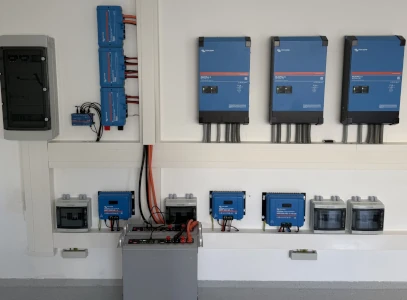
Our Building: A Living Model of Local Energy
The photovoltaic installation on the roof converts sunlight into electricity throughout the day, every day of the year. The amount of output varies with the seasons, the weather, and the time of day — which is exactly where the battery comes in.
The battery storage system captures surplus electricity generated during peak sunlight hours and holds it for later release. In the evening, on cloudy days, or during periods of high demand, the battery discharges stored energy to cover the building's needs. The result is a system that is not dependent on the sun being up at the moment you need power.
The combination of solar generation and battery storage creates a complete, self-contained energy ecosystem. It is the infrastructure of an energy future in which the need to import power from carbon-based sources shrinks — and eventually disappears.
How Our System Works
Understanding the mechanics of on-site electricity generation helps to see why it is so future-proof.
- Solar Generation:
Photovoltaic panels mounted on the building's roof capture sunlight and convert it into direct current electricity through the photovoltaic effect. An inverter converts it to alternating current for use in the building.
- On-Site Consumption:
The generated electricity directly feeds the building's electrical load, reducing or eliminating the need to draw power from the grid at that moment.
- Battery Storage:
When generation exceeds immediate demand, the surplus is routed to the battery. The battery charges and holds the energy as chemical potential, available on demand
- Demand Matching and Discharge:
When the building's consumption exceeds current solar production — in the evening, at night, or on overcast days — the battery discharges its stored energy to close the gap. The system only draws from the grid when both solar output and battery capacity are insufficient.
- Continuous Optimisation:
The control system continuously monitors generation, consumption, and battery state to maximise self-consumption and minimise grid dependence. As consumption patterns change, the system adapts.
This cycle runs 365 days a year. The more the building uses local energy, the less it relies on external sources, and the further ahead it is on the path to energy independence.
The Long-Term Benefits of On-Site Electricity Generation
| Benefit | Why It Matters for the Future |
|---|---|
| Energy Independence | Reduces dependence on external suppliers and a carbon-based grid. As fossil energy becomes scarcer and more expensive, local generation becomes a strategic asset. |
| Cost Stability | Shields the organisation from volatile grid prices. Self-generated solar electricity carries no fuel cost. |
| Reduced Environmental Impact | Every kilowatt-hour produced from clean, local sources replaces a kilowatt-hour of grid-sourced, carbon-emitting electricity. The cumulative effect over decades is significant. |
| Resilience and Reliability | Battery storage provides a buffer against grid outages and demand peaks. In an era of climate-driven infrastructure stress, that buffer is a security advantage. |
| Scalability | The system can be expanded — more panels, a larger battery, additional storage chemistry — as energy needs grow. It is an investment that compounds over time. |
| Future-Ready Infrastructure | As grid architectures evolve toward decentralised, peer-to-peer energy trading, on-site generation and storage put the building in a position to participate, not just consume. |
The Long-Term Benefits of On-Site Electricity Generation

Build the Energy Future
On-site electricity generation is about more than reducing today's power bill. It is about preparing for the world we are moving into — a world defined by energy scarcity, price volatility, and an urgent need for cleaner power. By generating, storing, and controlling our own energy, we are not merely managing the present. We are building the future.
The question is no longer whether the energy transition will happen. It is whether your organisation will be ready when it arrives. We chose to be ready.
Feel free to reach out if you have any questions!